Spaces for Therapy
Therapy spaces carry a different kind of weight. They are not simply rooms for conversation. They hold stories, silence, hesitation and small steps forward. A well-designed clinic is not loud about its qualities. It does not announce that it is healing. It creates an atmosphere where people feel grounded enough to speak and still enough to listen.
When designing therapy clinics, one should begin with the idea of safety. Not the exit-sign kind of safety, but the internal kind. People walk into these rooms carrying things that are often difficult to name. The environment should not demand anything from them. It should feel steady, calm and unhurried. This feeling begins at the door, sometimes even in the parking lot. A quiet entry sequence sets the tone. A clear path tells people they are welcome and that the space has been prepared for them.
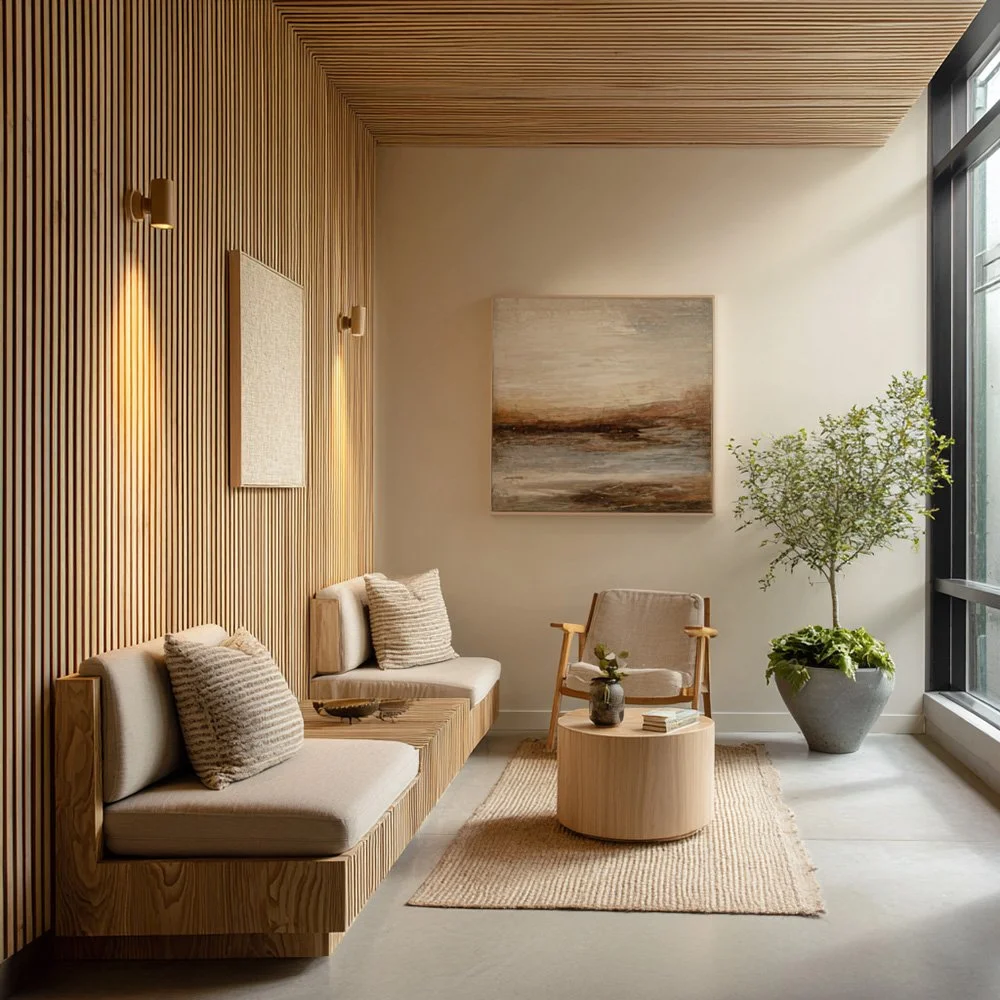
Light matters. It shapes emotion in subtle ways. Natural light, even in small amounts, can soften a room. Diffuse light creates warmth without glare. A window placed at the right height provides openness without exposure. In therapy rooms, harsh daylight can feel invasive. Too little light can feel heavy. The balance is delicate, and when it is right, the room feels like it is breathing at the same rhythm as the person inside it.
Acoustics are equally important. Sound travels easily in commercial spaces. In therapy clinics, it should not. Conversations need privacy. Footsteps need softness. Mechanical systems should hum quietly, not interrupt a moment of reflection. A well-tuned acoustic environment does not draw attention to itself. It simply removes the tension that comes from being overheard or distracted.
Circulation shapes the emotional experience. A waiting area that feels exposed can increase anxiety. Small choices define the atmosphere. People should never feel rushed. They should never feel observed. The best therapy clinics are planned with empathy, not efficiency.
Color and texture play quieter roles. Soft tones help the mind settle. Natural materials absorb emotion rather than reflect it back. Wood, plaster, fabric. These are materials that age well and feel familiar. They carry a sense of care. Rooms with too much sharpness or shine can feel clinical in ways that create distance. Healing spaces need a gentler touch.
Even the layout of the furniture matters. The distance between chairs, the orientation toward a window, the presence of a small plant or a simple shelf. These details give shape to the conversation. They help people find a comfortable posture. They reduce the sense of formality without losing structure.
A therapy clinic is not just a functional environment. It is an emotional one. When the design supports this, the space becomes more than a set of rooms. It becomes part of the healing process. People often do not notice the design directly. They simply feel a little safer, a little more open and a little more able to do the work they came to do.
A good therapy clinic does not try to impress. It tries to understand. And when it does, the architecture becomes a quiet partner in the work that happens inside.