Designing for Movement
Architecture shaped by how bodies move, recover, and return over time.
Movement-based spaces sit between healthcare, wellness, and everyday life. They are not clinics in the traditional sense, but they are places where people come to strengthen, recover, and better understand their bodies. In these environments, design begins with how bodies move through the room. Proportion, light, material, and detail follow from that understanding.
The aim is sustained focus. Circulation, acoustics, and spatial clarity should support breath, posture, effort, and recovery without distraction. When a space is designed well, movement feels supported and intuitive, allowing the body to work naturally within it.
Wellness Over Time
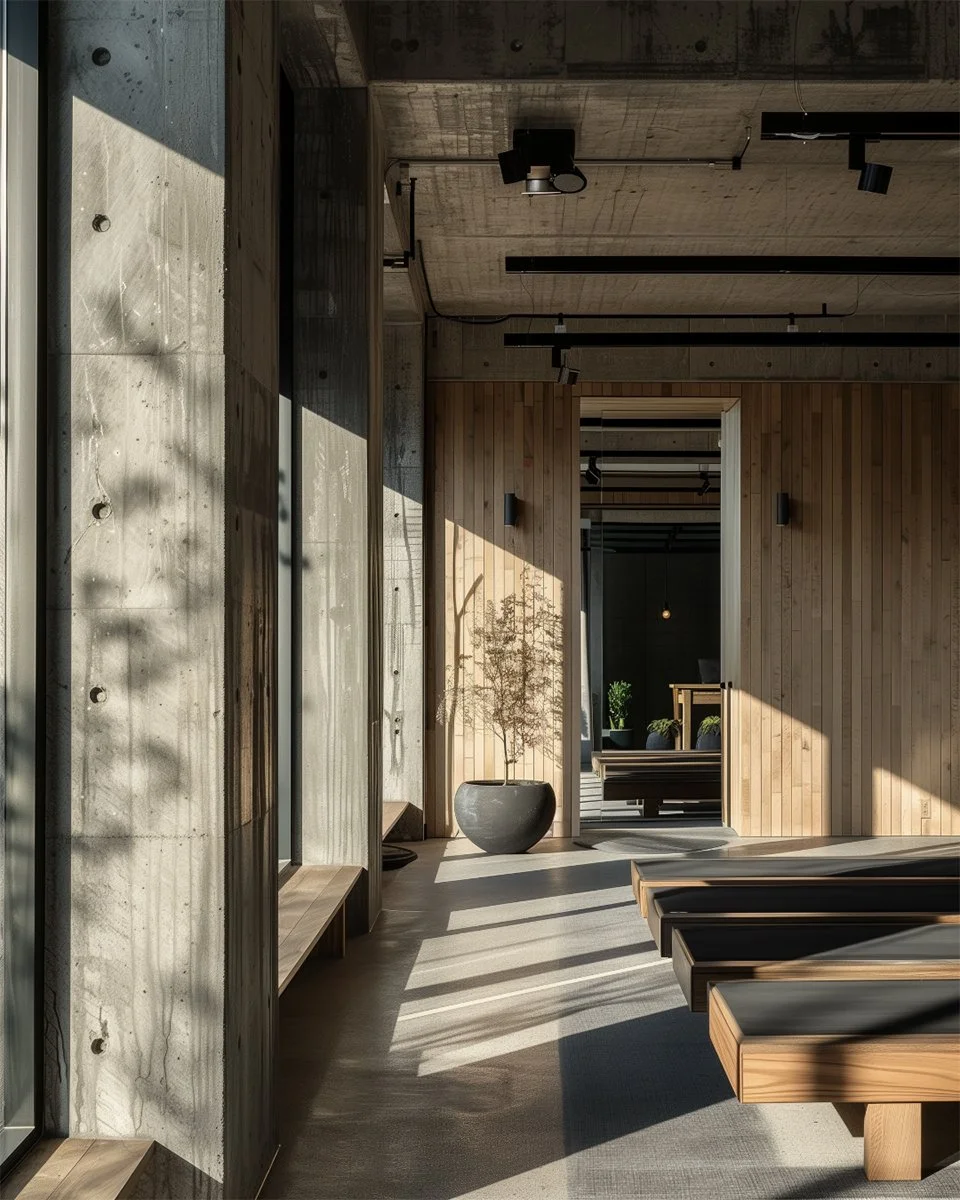
Wellness is often discussed through a visual language: light woods, plants, soft colors. These elements matter. When used well, they shape atmosphere, support identity, and help spaces feel grounded and welcoming. They are not an afterthought.
At the same time, wellness design cannot stop at appearance alone. It begins with how people arrive, how long they stay, and how the space supports repetition over time. These are places people return to multiple times a week. Durability, clarity, and calm matter as much as beauty.
Owners benefit from spaces that age well, that do not feel dated after a few years, and that support long-term membership rather than one-time visits. The most successful studios feel composed and intentional, with aesthetics that are integrated into how the space functions, rather than applied as a theme.
Designing for Different Types of Movement
Not all movement is the same, and the architecture should acknowledge this.
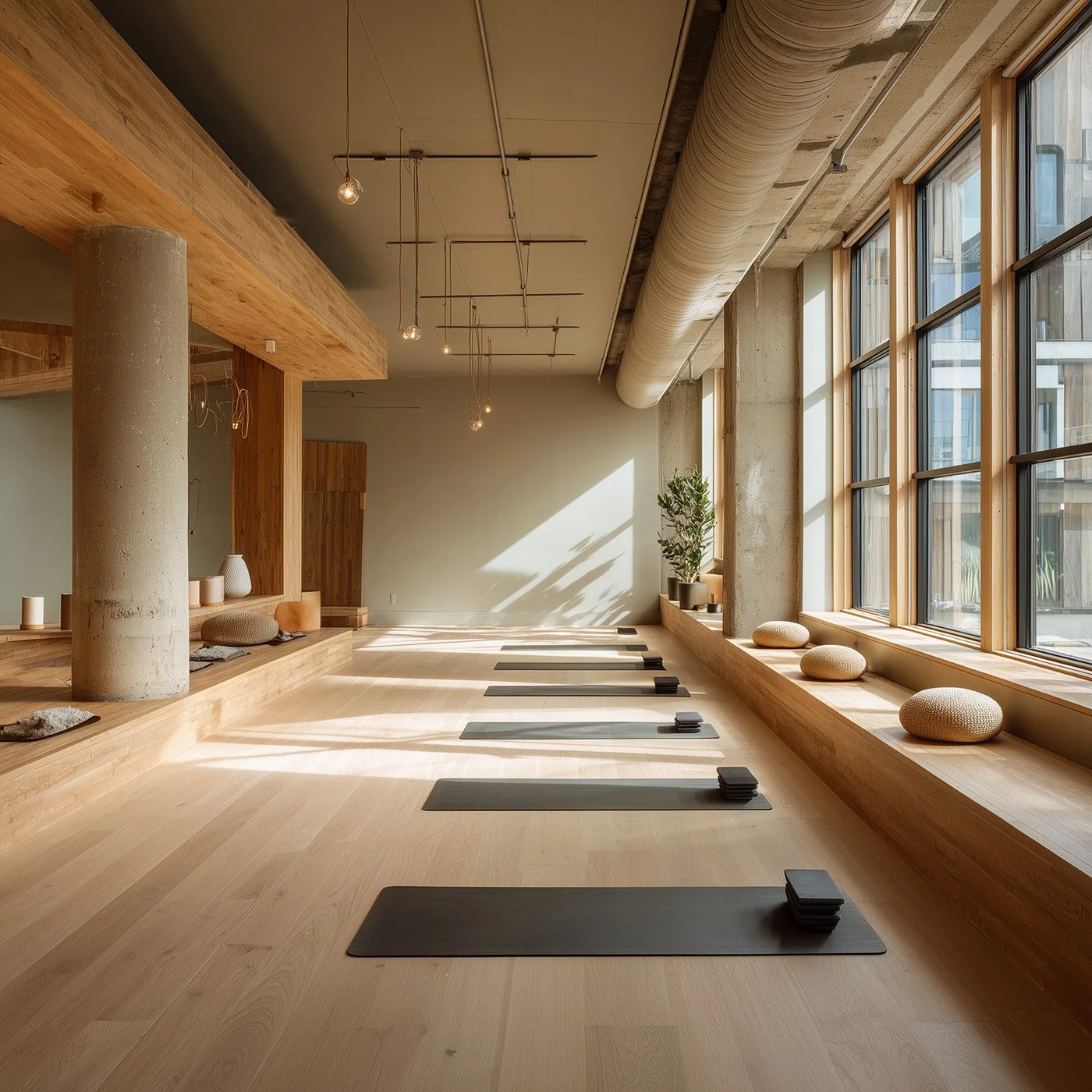
Slow, controlled practices like yoga or Pilates require visual quiet, generous floor space, and ceilings that allow breath and extension. Rehabilitation and physical therapy demand clarity, safety, and adaptability, with room for equipment, observation, and instruction. Strength and conditioning spaces require structure, impact resistance, and careful coordination between zones of intensity and zones of recovery. Just as important, they benefit from moments of softness: places to sit, stretch, lie down, and recover without being pushed immediately back into effort.
Good design starts by understanding what the body is doing in each room. Where does it strain. Where does it rest. Where does it need support, and where does it need freedom.
Engaging the Senses Without Overstimulation
Movement spaces are deeply sensory, whether intentionally designed or not.
Sound is often the most overlooked element. Echo, vibration, and background noise can undermine focus and instruction. Light should be even and legible, without glare or flicker. Floor systems should be selected for comfort, impact absorption, and acoustic performance, in addition to appearance. Materials at points of contact, floors, walls, and equipment, should feel comfortable, durable, and predictable during movement.
Scent, temperature, and air movement also shape experience. A room that feels stale or overly conditioned pulls attention away from the body. Fresh air and stable temperature help people stay present and engaged.
The aim is not sensory control, but balance.
Arrival, Check-In, and Changing
Arrival should feel calm and legible, not transactional. Check-in should be efficient and human, with clear sightlines and intuitive flow. Changing rooms deserve particular care. They are vulnerable spaces where people transition between public and private selves.
Thoughtful layout, privacy, and material choices here build trust. Providing a range of changing options, from open areas to more private rooms, allows people with different comfort levels to feel at ease. When users can choose how much privacy they need, the space feels respectful and welcoming without calling attention to itself.
Just as important, these areas must be easy to clean and maintain. Durable surfaces, clear floor lines, proper drainage, and thoughtful detailing allow staff to keep changing spaces consistently clean throughout the day. When these spaces feel well cared for, users feel comfortable returning.
From an operational standpoint, changing rooms also need to move people smoothly during peak times. Good design supports turnover without feeling rushed, helping maintain both cleanliness and calm even during busy hours.
Staff, Back-of-House, and Long-Term Operations
Owners often focus on the studio floor, but staff experience matters just as much. Back-of-house design determines whether a studio runs as a system or survives on improvisation.
Instructors and therapists need places to prepare, store personal items, decompress, and move between sessions without friction. Clear separation between public and back-of-house zones reduces interruptions and supports consistent daily operations.
Mechanical systems, storage, laundry, and equipment servicing should be designed early, not treated as afterthoughts. When these systems are coordinated and predictable, staff time stays focused on instruction and care rather than logistics.
Over time, this kind of operational clarity supports reliability, scalability, and long-term performance across the business.
Equipment as Part of the Architecture
Equipment is not separate from design. It shapes how rooms are used, how bodies move, and how spaces wear over time.
More equipment does not automatically make a better space. In many gyms, performance suffers not from a lack of machines, but from overcrowding and compromised movement. A smaller number of well-chosen pieces, properly spaced and clearly integrated, often supports a wider range of training than a dense collection of specialized equipment.
Planning for durable, high-quality equipment from the beginning allows the architecture to support it properly. This includes clearances, structural capacity, integrated storage, and power or data where needed. When equipment and space are designed together, circulation stays clear and movement remains intuitive.
Spaces that accommodate equipment deliberately feel composed rather than cluttered. They age better, adapt more easily as programs evolve, and reduce the pressure to constantly rearrange the room. For owners, this means fewer compromises, clearer identity, and a space that can grow with the business instead of fighting against it.
Closing Thought
Designing for movement is ultimately about respect: for the body, for the staff who guide it, and for the daily rituals that bring people back again and again.
When architecture supports movement quietly and intelligently, it becomes part of the practice itself.