Restaurants People Return To
A restaurant begins long before anyone steps inside. The experience starts with the photographs people scroll past online, the way a friend mentions the place after a good night, the sign someone spots from the road and quietly files away. By the time a guest reaches the door, they already carry an expectation. The architecture has to meet that expectation with confidence, but also with restraint. It does not need to shout. It only needs to say: you are in the right place.
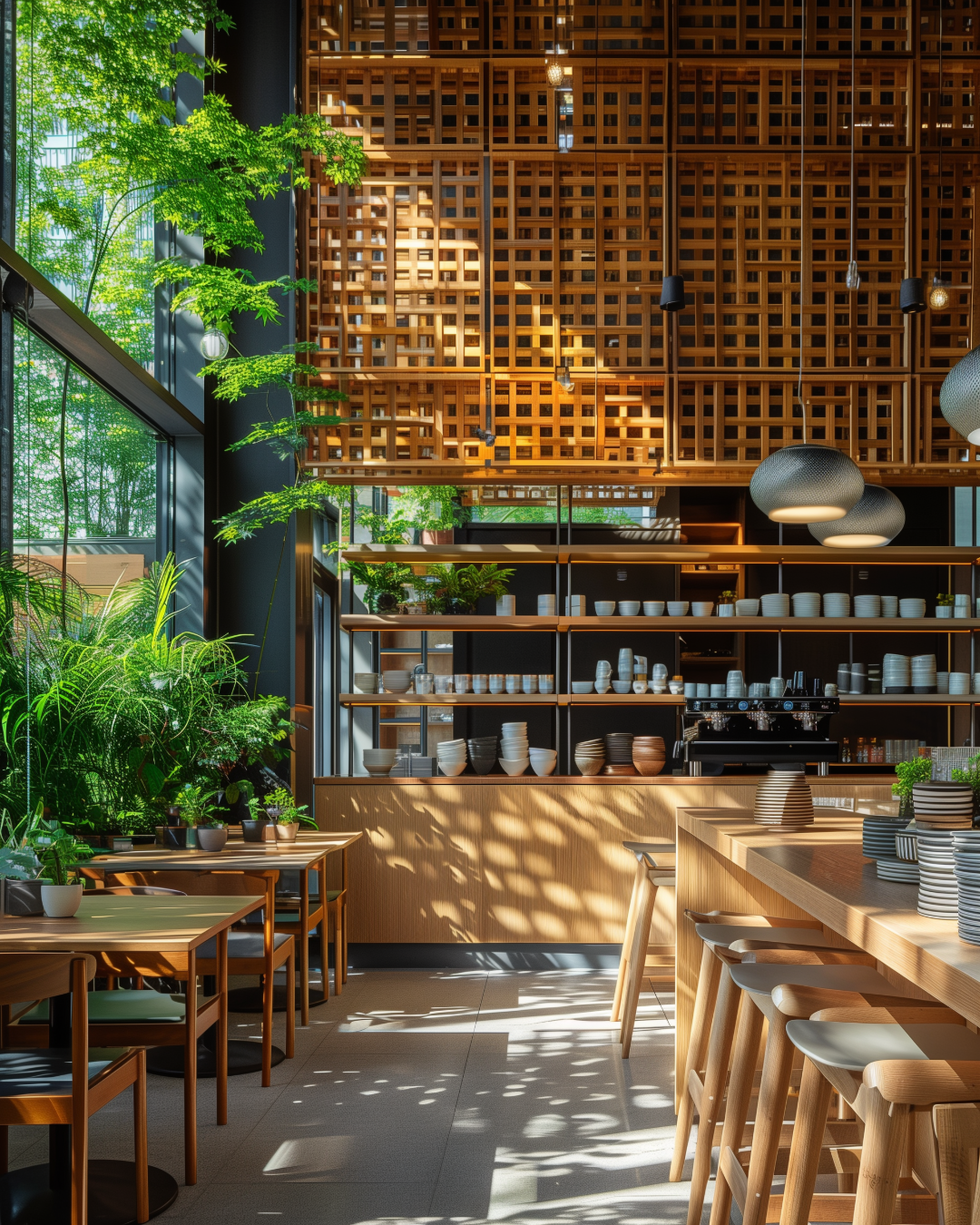
Once a guest crosses the threshold, the room must settle them immediately. People decide in seconds whether they can relax enough to truly taste their food. If the lighting is brittle, they stay alert. If the acoustics echo, they tighten. If the space feels confused, they never fully arrive. Architecture sets the emotional conditions for eating. When it is right, the room allows people to forget themselves, which is the first requirement for enjoying a meal.

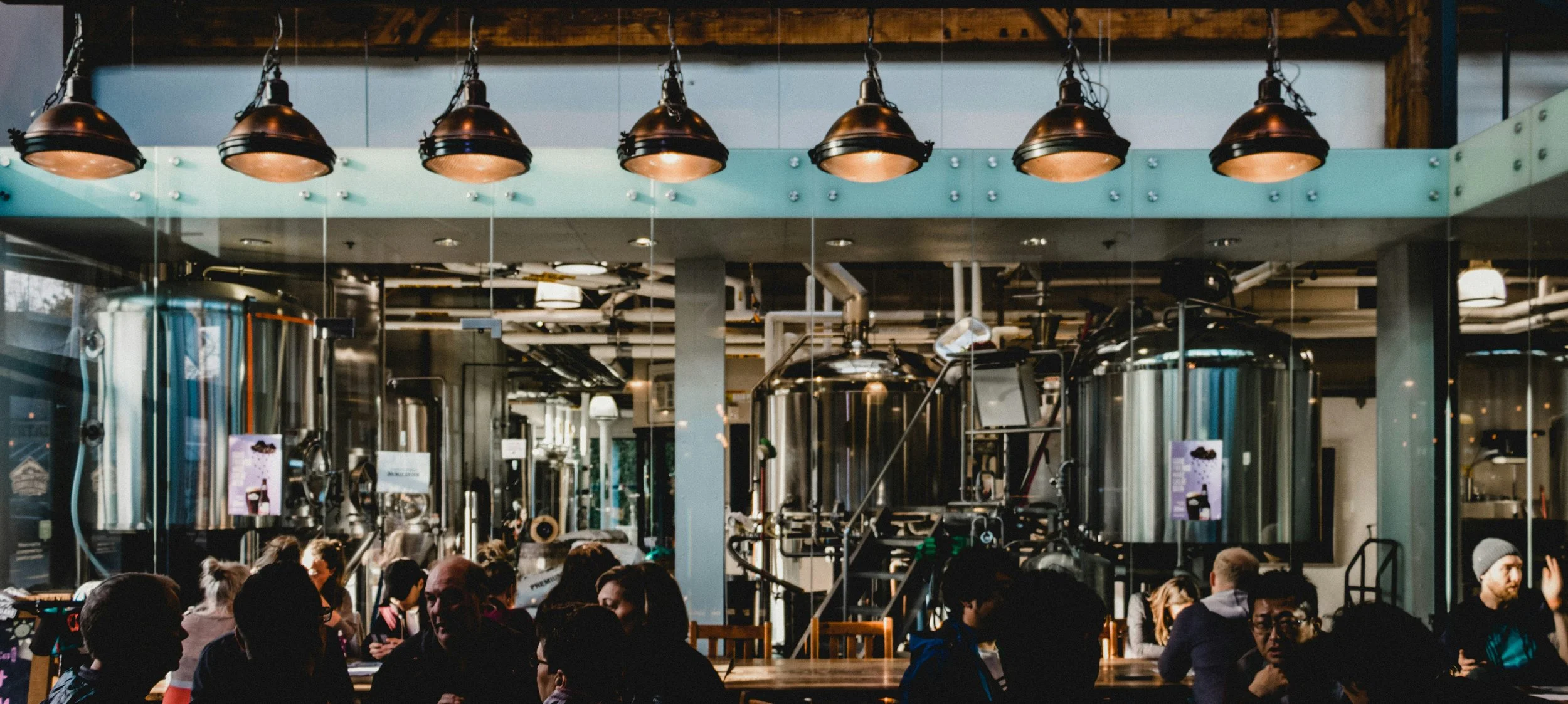
The drink shapes the room as much as the lighting does. A glass of wine asks for a slower atmosphere, a space where conversation stretches and people lean back instead of forward. Beer brings a different rhythm, cocktails another, each one changing the social temperature of the table. Good restaurant design anticipates these shifts, creating a room that adapts to the mood of the drink in a way guests feel more than see.
Designers sometimes talk as if the room is the star, but the truth is simpler: the food is the center of the experience. Everything else exists to let the food come through clearly. Atmosphere matters, but only as a frame. A good dining room is like a well written stage direction: invisible, inevitable, supportive. The materials, the light, the shadows, the spacing of chairs all should disappear into the background the moment the first bite is taken. Guests should feel held, not impressed.
This is where subtle decisions carry weight. Soft light that protects privacy without dimming the food. Materials that absorb sound instead of reflecting it. A rhythm of tables that gives people room to breathe, but keeps them close enough for the hum of conversation. When the atmosphere is tuned correctly, the architecture becomes quiet. And in that quiet, the food speaks more loudly.
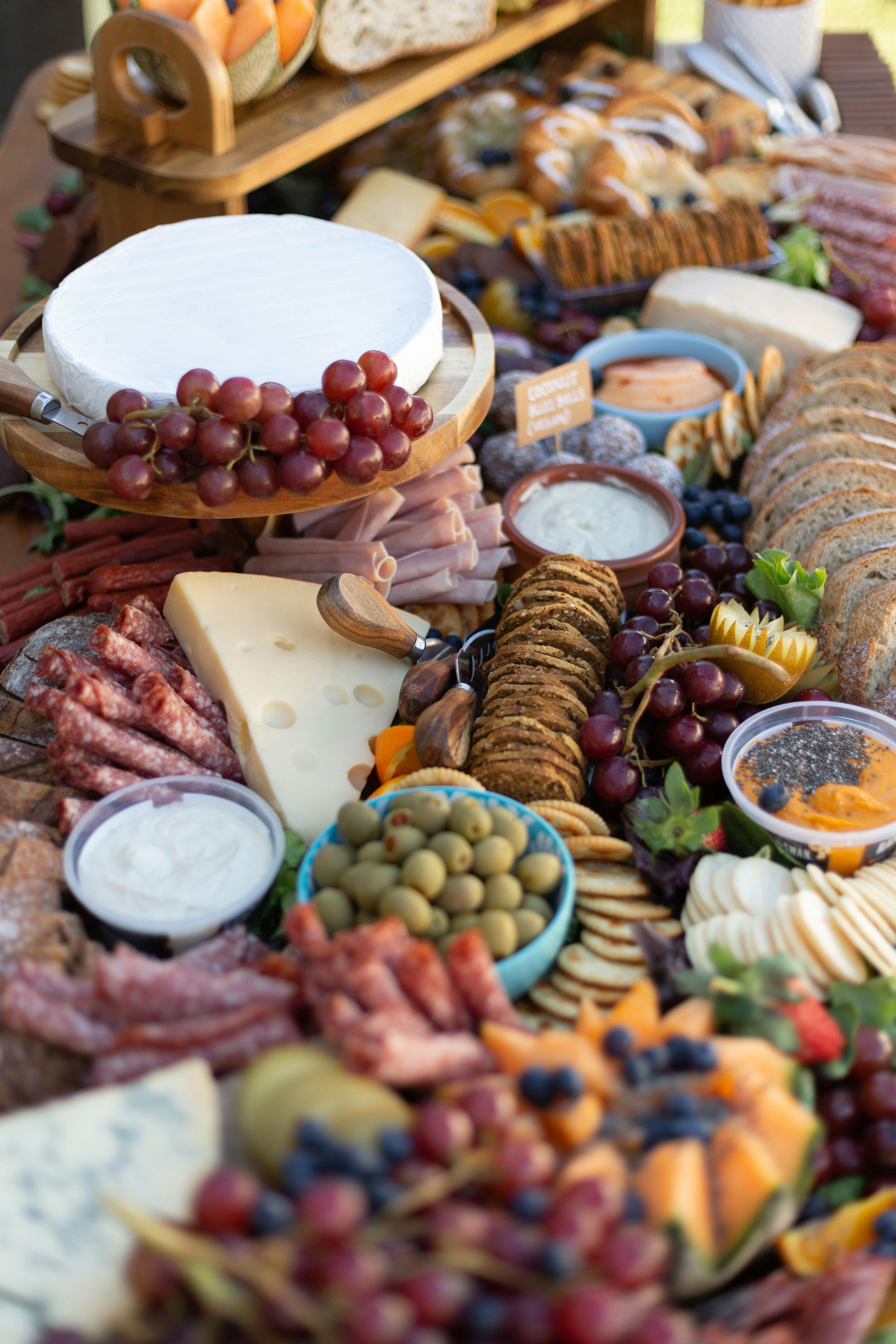
A charcuterie board is a small lesson in hospitality: abundant, colorful, layered, a little chaotic but always inviting. People love it because it feels generous, because it offers choice without pressure. A restaurant can work the same way when its spaces are arranged with intention but not rigidity. The right amount of order and disorder creates an atmosphere that feels alive, a place where guests settle in without needing instructions.
But no room, no atmosphere, no lighting concept matters unless the kitchen works.
The kitchen is not the back of house. It is the heart. If it struggles, the restaurant struggles. If it moves smoothly, the entire operation feels alive.
Technically, a kitchen is a complex machine:
- hood systems and exhaust paths
- make up air
- gas and electrical capacity
- grease waste
- refrigeration loads
- prep space
- dish flow
- the geometry of the pass
- circulation for staff who need to move quickly without collision
Every one of these decisions shapes the service rhythm. But beyond the technical demands, a well designed kitchen creates something harder to quantify: a steady pulse. When cooks can move freely, when the line breathes, when plates land at the pass without friction, the whole restaurant feels calmer. Guests can sense that calm even if they never see the kitchen.
Menus influence layout. Chefs influence flow. The identity of the place influences the equipment and the zones that matter most. A restaurant that serves slow, layered dishes needs a very different heart than a place built on speed and fire. The design should follow the food, not the other way around.
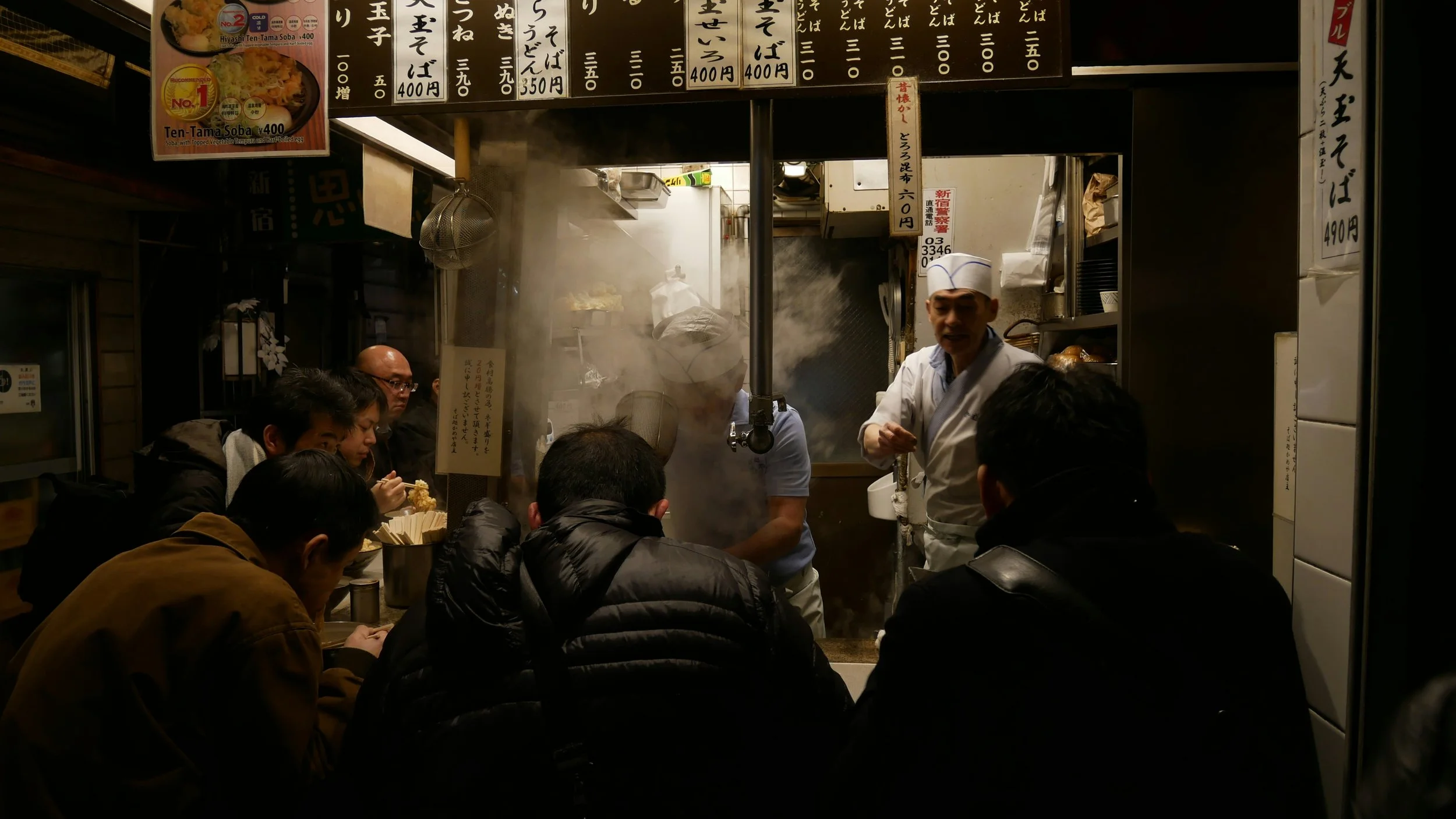
In a small Tokyo ramen stall, the chef and the kitchen are a single instrument. Every motion is practiced, every gesture tied to heat, timing, and intuition. The space is almost nothing, but the craft fills it completely, and the room becomes an extension of the chef’s body. This is the purest expression of restaurant architecture: a kitchen tuned so closely to the cook that it becomes part of the dish itself.
Owners often underestimate how much the kitchen determines the guest experience. They think of it as a technical area, a box to solve. But when a kitchen is overworked or underpowered, tension leaks into the dining room. Service slows. Staff burn out. Guests feel the strain, even if they cannot name it. The heart dictates the health of the whole body.
This is why kitchen design must begin early. Before finishes. Before decor. Before zoning inside the dining room is finalized. The heart comes first. The room around it is built in response.
Design does not need to overwhelm the food. It should create the conditions where the food can be remembered. Guests will not always recall the chair they sat in or the wall texture or the pendant lights. But they will remember how the meal tasted and how the space allowed them to fully experience it.

In Milan, the after work spritz is not just a drink, but a small ritual that defines the rhythm of the city. A table in the afternoon sun, two glasses catching the light, and suddenly the entire street feels different. Moments like this show how a simple gesture can shape the identity of a place. A well designed patio or corner table can become part of a city’s memory, the spot where culture gathers almost without noticing.
A successful restaurant is one where the architecture is confident enough to stay out of the way. It guides without intruding. It holds without announcing itself. It supports the chef, the staff, and the service rhythm. And it gives guests room to disappear into the food.
If the room is the face of the restaurant, the kitchen is its heart. When both are designed with clarity, the experience feels effortless. Guests settle, eat slowly, stay longer, and return. The architecture becomes a quiet partner in the life of the restaurant, not the star, but the frame that makes the star shine.
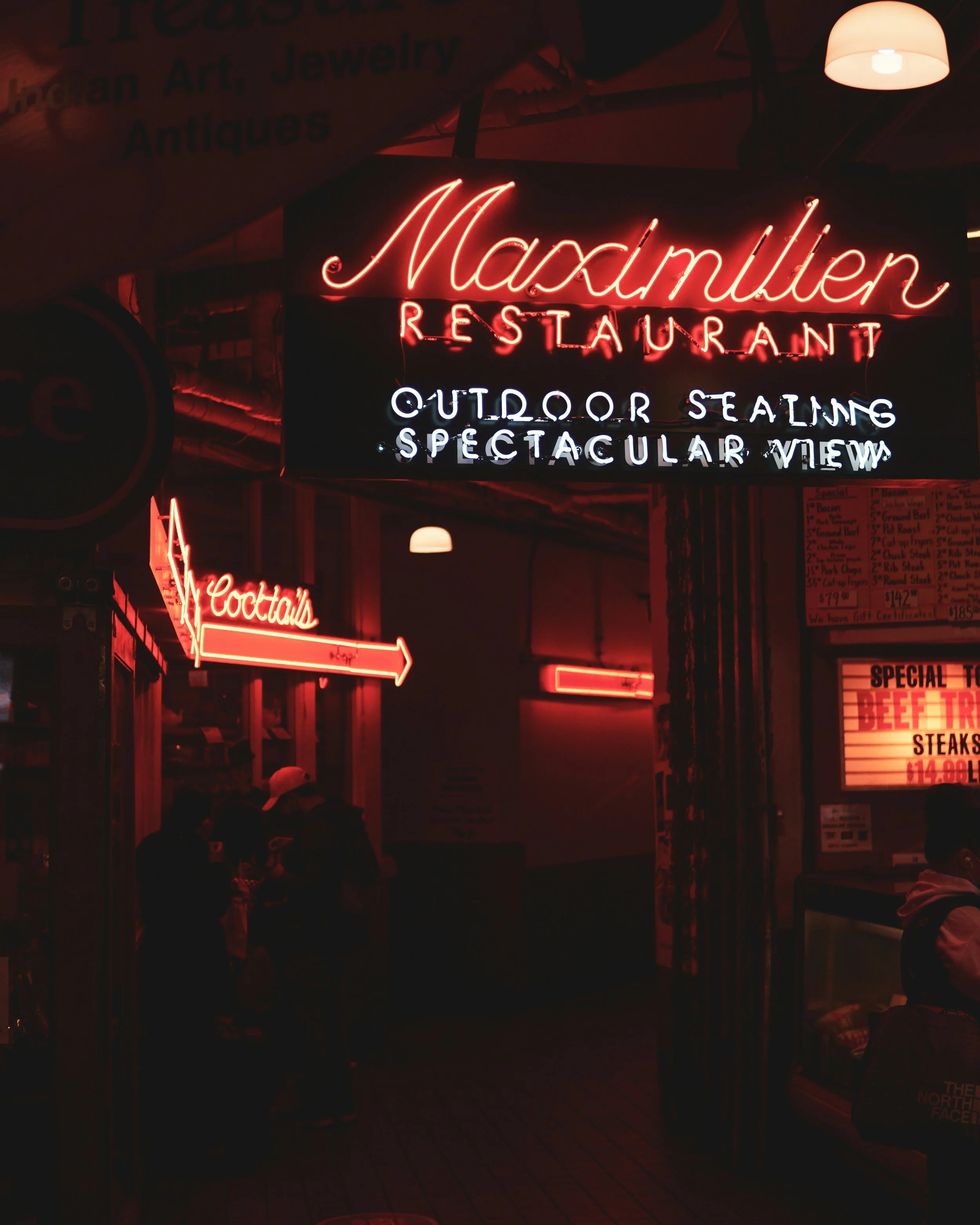
Neon light, weathered corners, and the soft hum of Pike Place at night give this scene a kind of timeless Seattle energy. It is eclectic without trying, a mix of nostalgia, grit, and charm that feels more honest than anything curated. Seattle’s food culture has always been at its best when it balances refinement with character, when the old and the contemporary overlap without apology. This kind of atmosphere is a reminder that identity does not need to be invented from scratch; it only needs to be revealed.